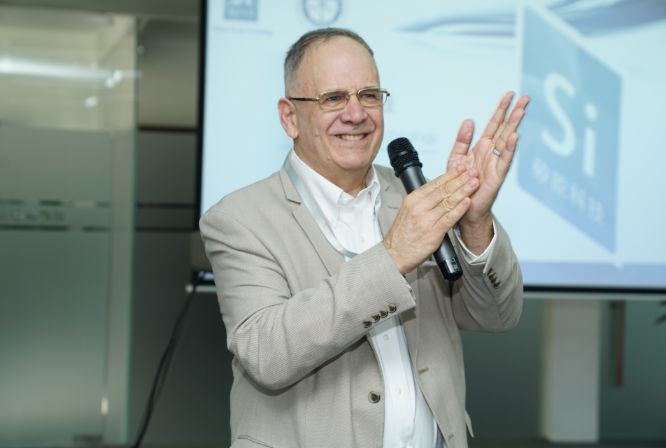
作者:白杰先( Jesse Parker )
曾任IBM半导体微电子部门副总裁,软银资本全球基金管理副总裁,Tallwood VC副总裁。2002年以来主要从事包括半导体行业在内的天使投资,风险投资及国际收购投资。同时兼任上海交通大学海外学院与安泰管理学院的客座教授。目前是高瞻企业咨询有限公司的总经理,矽能科技总经理。

Entrepreneurship Corner of Silicon Power Technology
Insights for semiconductor Entrepreneurs
As an entrepreneur in the semiconductor industry, the first step one must consider is “why” become an entrepreneur? Regardless of which industry one enters becoming an entrepreneur is a difficult choice. The challenges are significant and the likelihood of success is very low. In the semiconductor industry, the challenges are much higher than in other industries such as on-line internet businesses. The success rate is also very low.
Why leave the safety and comfort of being a design engineer at a major semiconductor company for the loneliness of starting one’s own company? What is your reason for starting your own company? Is the objective to become rich? (there are easier ways to become rich); Is the objective to demonstrate your design skills? (there are easier ways to accomplish this); is the objective to “try” something new (going on vacation may be more fun); is the objective to find an angel investor or a venture capitalist who will give you “free” money? (there is no free lunch). Entrepreneurs need to do a self-examination to honestly determine why one wants to start their own company. These are not empty words. An honest self-examination will help one focus one’s energy and better understand one’s strengths and weaknesses.
On the personal side, does your immediate and extended family support you in becoming an entrepreneur? Are they prepared to go without income for several years? If you fail and are left without any cash or product, will they still respect you? Will they support you trying a second time to build a company? These are essential questions that one should ask oneself and one’s family members before starting a company.
Many entrepreneurs state that their objective is to become a public company. While the benefits of becoming a public company are well known, very few entrepreneurs reach this level. Completing an IPO is not the end point, it is the starting point. Everything before an IPO is preparation for arriving at the “starting line.”
Very few semiconductor entrepreneurs understand that a product or a product line is not a company. Knowing how to build a company that has dozens of suppliers and hundreds of customers is not something that is learned in an Institute of Microelectronics, nor is it something that can be learned “on the job.” Market competition is fierce, simple mistakes can kill a promising company. Consider selling your startup to a larger company. You will not be locked up for 2-3 years, you will receive cash and you can establish your second startup !
Many experienced investors understand that startups should be raised as “fat pigs” rather than promising children. Pigs can be repeatedly raised, slaughtered and then raised again; children cannot be. The point is that if your company is your child, you will not necessarily make the best decisions for its future; you may be too cautious; you may miss opportunities, etc..
Finally, before you start your company, you should spend a considerable amount of time researching all aspects of your idea. Gather as many opinions as you can. Review markets in China and around the world. Speak to experts. Speak to customers. Speak to investors. Become an expert yourself. Learn to understand financial statements. Most importantly, attract the best people that you can find. Without the best team, no single person can be successful in starting a company.
Be prepared for failure. Only through failure will you grow and become an even stronger entrepreneur.
The first step in starting a company is to know yourself, know your motivation, be clear on what your goal is and make sure your family and friends support you !
Next week’s topic: What is Startup Leadership?
矽能科技创业角:
第二期话题:设立公司的第一步
作为半导体行业的创业者,第一步需要考虑的是:为什么要创业?其实对于各行各业而言,选择创业都是一次艰难的选择,因为挑战巨大而成功的可能性很低。而相较于当下以及过去数年间在热潮中的在线互联网业务,半导体领域的创业面临的挑战更大,成功的几率依然很低。
为什么要舍弃在一家大型半导体公司做设计工程师的安全性和舒适感,而去追寻创办自己公司的孤独感呢?这样做的理由是什么?目的是变得富有吗(应该有其他更容易的致富选择)?还是展现芯片设计能力(也应该有其他更容易的展现途径)?是“尝试”新的事务(去旅游可能更有乐趣一点)?亦或是拿到天使投资人或风险资本的“免费”投资(世上可没有免费的午餐)?创业者需要自我审视,以诚实地明确为什么要创办自己的公司。这些不是空话。诚实的自我审视将有助于一个人集中精力,以更好地认知优势和缺点。
在个人方面,你家庭乃至所有亲属是否支持你成为创业者?他们做好了多年没有净收入的准备吗?如果你在没有任何现金或资产的状况下创业失败,他们还会予以你尊重吗?他们会支持你二次创业吗?这些是在创办公司之前应该问自己和家庭成员的基本问题。
许多创业者表示,他们的目标是成为一家上市公司。虽然成为上市公司的好处众所周知,但很少有企业家能达到这一水平。完成IPO不是终点,而是新的“起跑线”。IPO之前的一切都是为了到达“起跑线”的准备。
为数不多的半导体领域创业者明白拥有产品或产品线不等于公司。知道如何建立一个拥有数十家供应商和数百名客户的公司并不是在微电子研究所可以学到的东西,也不是“在工作中可以学到的东西”。市场竞争激烈,一个细小的错误可能杀死本有前景的公司。考虑让更大的公司收购你的创业公司,在创业2-3年后即有可能“解套”,收回现金后可以二次创业!
许多有经验的投资者都明白,创始人对待公司的态度应该是养 “肥猪”而不是“养孩子”。猪肥了可以杀了卖掉,然后再次饲养,孩子不可能。重点是如果你把公司当成是你的孩子,你不一定会为其未来做出最好的决定,你可能会因为过于谨慎而错失许多机会。
最后,在创办公司之前,你应该花大量的时间探寻关于创业这个想法的各个方面:收集尽可能多的意见;研究过去在中国和全球范围内的该细分市场;与专家交流, 与客户交流,与投资人交谈;自己成为专家;学习理解财务报表;以及重要的是,吸引你能找到的最好的人来一起创业,没有最好的团队的支持,任何人都无法成功创业。
做好迎接失败的准备。只有经历过失败,你才能成长,成为更强大的企业家。
总而言之,设立公司的第一步就是了解自己,了解自己的动力,明确自己的目标,确保你的家人和朋友支持!